
Coastal Ecology Protection Group Inv & Ors v City of Charles Sturt, and what it means for a councils Community Land Management Plans
26 February 2019
In September 2017, in the Supreme Court of South Australia, Justice Blue delivered a decision in Coastal Ecology Protection Group Inv & Ors v City of Charles Sturt [2017] SASC 136 (‘the Coastal Park decision’).
Since that time, there has been some concern but a lot of confusion in the local government sector regarding the impact of this decision, as it pertains to Community Land Management Plans (‘CLMPs’) adopted by councils pursuant to section 196 of the Local Government Act 1999 (‘the LG Act’).
In this Alert we review the background to this matter and, hopefully, dispel some of the concerns and confusion that is or has been held in relation to both public consultation requirements, as well as the validity of CLMPs.
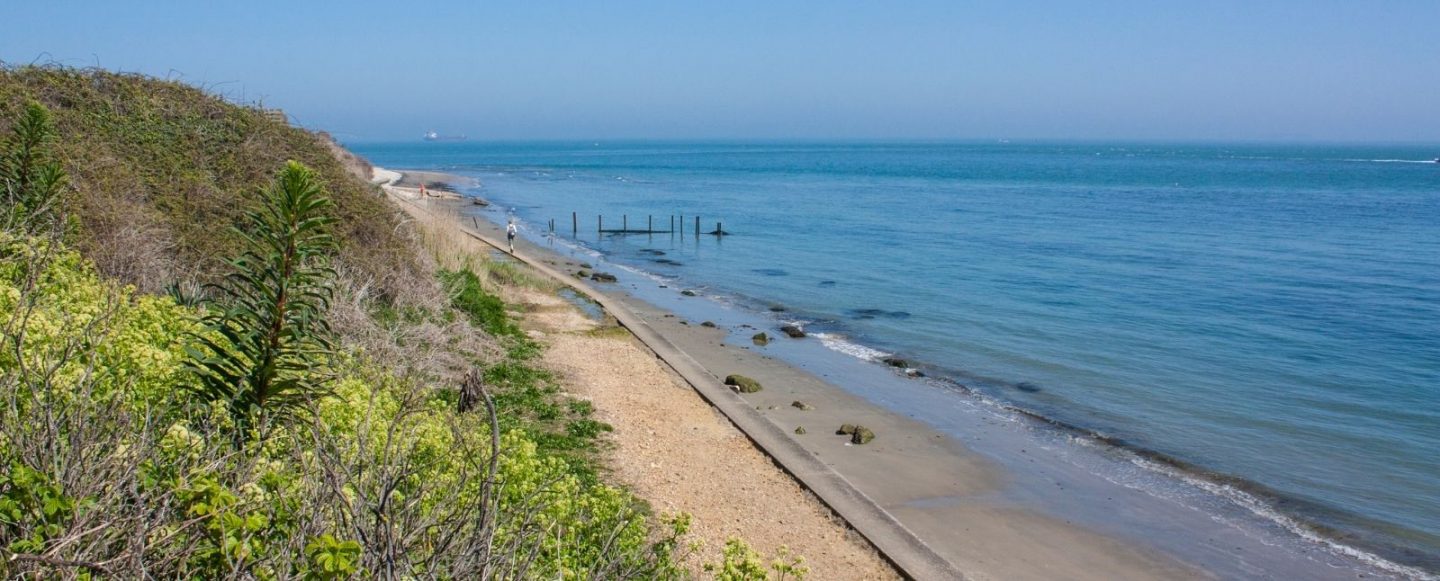
Briefly, in 2013 the City of Charles Sturt (‘the Council’) commenced consideration of the development of its portion of a State Government initiated and supported coastal path, to be developed along public coastal land between Grange and Semaphore Park. This land, apart from the Tennyson Dunes Reserve (which was land under the care and control of the Minister at the time), met the definition of community land under section 193 of the LG Act.
Public consultation was undertaken in relation to the proposed coastal path, in accordance with the Council’s Public Consultation Policy, adopted under section 50 of the LG Act.
After the initial consultation, in August 2013 the Council resolved to form a project reference group of community representatives, to consider design options for the coastal path.
In September 2014 the project reference group recommended a particular design and a report was prepared for the consideration of the Council. Further consultation was then undertaken in relation to the preferred option.
In February 2015, an amended planning study was prepared, because a portion of the path was required to traverse the Tennyson Dunes Reserve. However, specific public consultation was not undertaken in relation to this, now amended, coastal path design.
In April 2016, the Council resolved to adopt a CLMP relating to all coastal community land under its care and control, the objectives of which were ‘to protect the coastal dune system and coastal vegetation and to provide convenient and controlled public access to the beach and environs’.
Correspondingly, at the same meeting, the Council resolved to adopt a coastal path option as identified in the February 2015 planning study and requested that the administration prepare a further report for consideration in relation to the final location of the path.
A final alignment plan was prepared, depicting the location of the coastal path and recommending several design options.
At its meeting in January 2017, the Council resolved to adopt the recommended final path alignment and a particular design option and authorised the administration to approve variations to the path alignment, as required. Following this decision, an application for judicial review of the Council decision in relation to the coastal path was filed in the Registry of the Supreme Court of South Australia.
Justice Blue’s subsequent decision turned on the validity and operation of the Council’s Public Consultation Policy, the Coastal Park CLMP and the resolutions of the Council in relation to the path design. Specifically, by way of summary, Justice Blue held that:
- the Council resolution, at its meeting of April 2016, to adopt the Coastal Path CLMP, was in breach of its Public Consultation Policy. Consequently, the CLMP was invalidly adopted;
- further, the Council resolutions at its meetings of April 2016 and January 2017, as to the design of the coastal path, were, likewise, contrary to its Public Consultation Policy;
- whilst the Council had followed the statutory public consultation requirements as set out under section 50 of the LG Act, its Public Consultation Policy required something further, which the Council did not give effect to in making its decisions as to both the consideration and the adoption of the CLMP, as well as the proposed design options of the coastal path; and
- in any event, on the proper construction of the Council’s CLMP, the access objective for the community land in question related to access from the suburbs to the beach, and not to a continuous path parallel to the coast (in the style of the coastal path design). Accordingly, the Council resolutions in relation to the coastal path were contrary to its CLMP.
The Supreme Court’s determination in this matter is clearly fact-specific on the circumstances of the case before it. The terminology of the community land dedication, the terms of the CLMP and the public consultation process followed by the Council is not ‘globally’ applicable to the adoption and application, of all CLMPs.
However, in his decision, Justice Blue did provide some broad principles for consideration in the approach to public consultation, as well as to the preparation, adoption and application of a CLMP:
- a council is required to comply with its public consultation policy, in the preparation and adoption of a CLMP, as well as with any matter it determines to publicly consult on, whether as required by the LG Act, or on a discretionary basis;
- a council must manage its community land in accordance with a validly adopted CLMP; and
- in order to achieve compliance with the objective requirements in a CLMP under section 196(3) of the LG Act, the CLMP must include performance targets and a statement as to how a council intends to measure its performance in achieving the same.
Accordingly, contrary to the position that we have been asked to advise on previously, the Coastal Park Decision does not (and cannot be said to) operate to invalidate all CLMPs adopted to date. However, it is prudent for a council to review its CLMPs against the LG Act requirements, to ensure that they do not contain vague or generic statements about community land. Rather, they must contain objective and measurable targets for the care, control and maintenance of the community land.
In addition, we recommend that councils likewise review their public consultation policies, to ensure that they do not unintentionally contain requirements that exceed the statutory requirements, noting that if they do, the council will be required to give effect to these obligations on any public consultation process that is undertaken.
If you would like any further information or clarification about the impact of the Coastal Park decision, please contact:
Michael Kelledy on (08) 8113 7103 mkelledy@kelledyjones.com.au or Tracy Riddle on (08) 8113 7106 triddle@kelledyjones.com.au.